
When the House Goes Quiet
Volume 39: Back to School, Empty House, Restless Golden

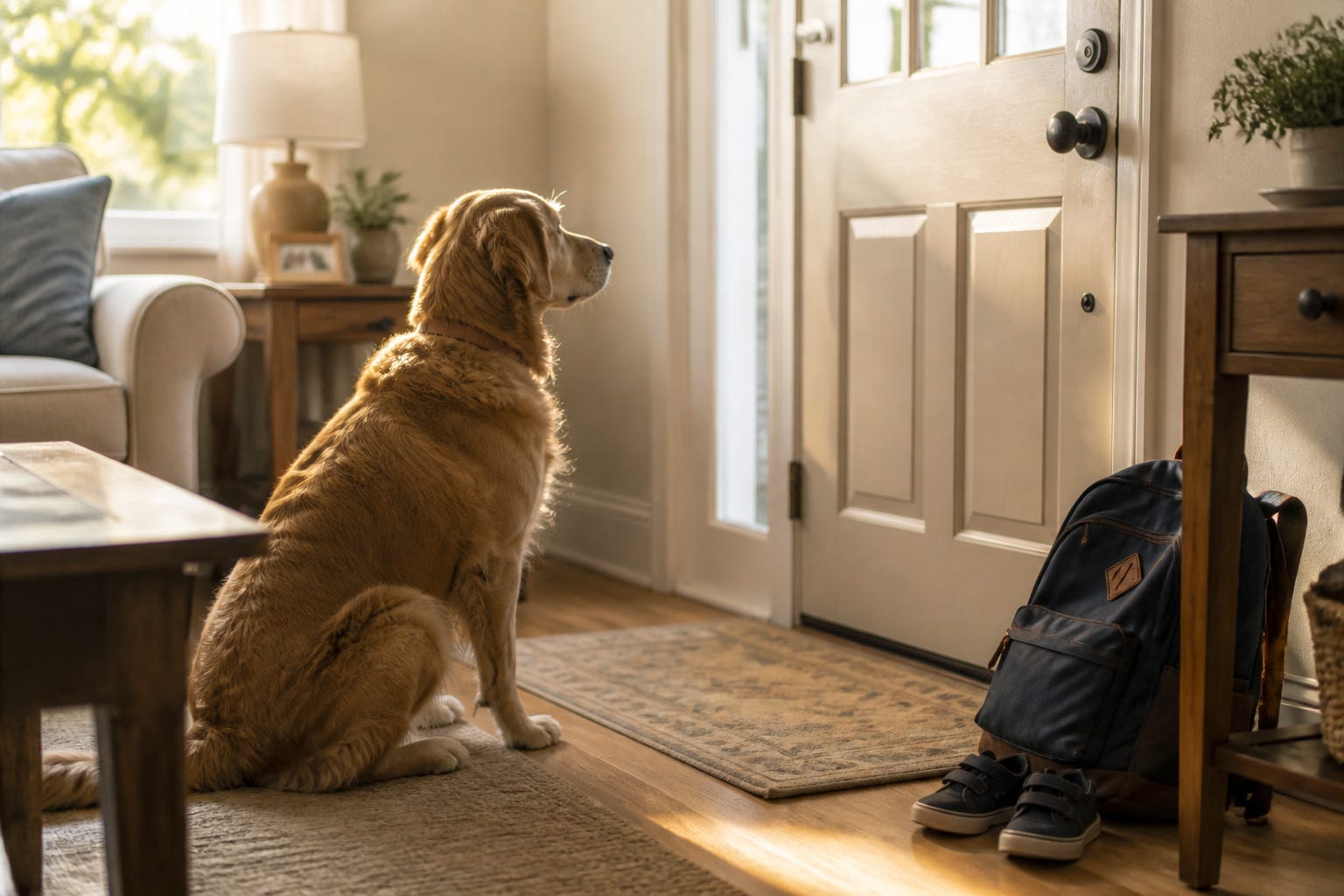
Ah yes. One week the house is loud and your golden is in the middle of everything. The next week the backpacks are gone, the door shuts, and you have a 70-pound shadow staring at you wondering where everyone went.
Goldens were bred to work next to people. They do not clock out because the school year started. A sudden empty house is a big change for a dog who spent summer glued to whoever was home. Some goldens nap through it. A lot of them pace, bark, chew, or turn into velcro the second you pick up your keys. This is not your golden being “bad.” This is a social, working breed trying to figure out where the pack went.
Is it boredom, or is it separation anxiety?
A bored golden is restless. They need a job. A golden with separation anxiety is distressed because you left (ASPCA, n.d.). Watch for trouble that only happens when you are gone, or while you are getting ready to leave:
- Pacing, panting, or drooling as you grab keys and shoes
- Barking or howling shortly after the door closes
- Chewing or digging at doors and windows
- Accidents in a house-trained dog
- Refusing food or a stuffed toy until you come back
If those things also happen while you are home, that is usually manners or potty training, not separation anxiety (ASPCA, n.d.). If you are not sure, call your vet. Rule out a medical issue first, especially with seniors.
Do this the week before school starts
Do not wait for the first Monday and hope for the best. Practice the new schedule now. Walk them before the house empties. A tired golden is a kinder roommate. In Florida in August, that walk has to be early. Midday pavement will burn paws, and a backyard is not a day camp when it is 90 degrees (see Volume 27). Water, shade, and air conditioning are not optional.
Leave for short trips while you are still home for the summer. Five minutes, then fifteen, then an errand. Come back boring. The ASPCA’s advice is the one we use: keep hellos and goodbyes small. A pat, “be good,” and out. When you walk in, say “hi” and wait until they settle before the full golden reunion (ASPCA, 2014).
Give them a job that starts as you leave. A stuffed Kong, a lick mat, a snuffle mat, or a puzzle toy. The goal is that your departure predicts something good, not the end of the world.
If they have a crate they already love, use it. If the crate makes them worse, do not force it. A baby-gated kitchen or laundry room with their bed is enough (ASPCA, n.d.).
What a good empty-house day looks like
Morning: Potty, walk or backyard play while it is still cool, breakfast, then the “I’m leaving” toy.
During the day: Cool house, water, a couple of safe chews, and no guilt-trip camera watching every ten minutes. Check once if you need to. Goldens can feel your stress through the phone too.
Afternoon: Another potty break if someone can swing by. Four to six hours alone is a long stretch for a young golden. Seniors need the extra break even more.
Evening: They have been waiting for their people. Give them ten real minutes before homework and dinner take over. A short training session, a retrieve in the yard, a brush-out. You do not have to entertain them all night. You do have to clock back in.
When it is more than an adjustment
If your golden is hurting themselves, destroying doors, or howling the whole workday, this is bigger than a puzzle toy. Talk to your vet. Ask about a trainer who uses reward-based methods, or a veterinary behaviorist. Do not punish them for what they did while you were gone. They will not connect the scolding from what they did at 10 a.m. They will only learn that you coming home is scary too. Medication or calming aids are another vet conversation (ASPCA, n.d.).
A note for the Tampa Bay pack
If your kids just went back to school and your golden is losing their mind, you are not the only house on the block. Comment what your empty-house routine looks like. Your golden does not need the summer back. They need to know the pack still exists, and that you always come home.
*Please note, as an Amazon Associate I earn from qualifying purchases.
References
ASPCA. (n.d.). Separation anxiety. https://www.aspca.org/pet-care/dog-care/common-dog-behavior-issues/separation-anxiety
ASPCA. (2014, September 4). How to ease your dog's separation anxiety. https://www.aspca.org/news/how-ease-your-dogs-separation-anxiety
TikTok caption: The house got quiet and the golden noticed. Here’s what we do the first week of school. Full Volume 39 is on The Golden Pupper